How to Grow Your Freelance Makeup Artist Business
Turn technique videos into a clear route to paid appointments. Audit your portfolio, service page, enquiries and pricing, then track which efforts actually produce bookings.
By Raphael Oliver
· 11 min read
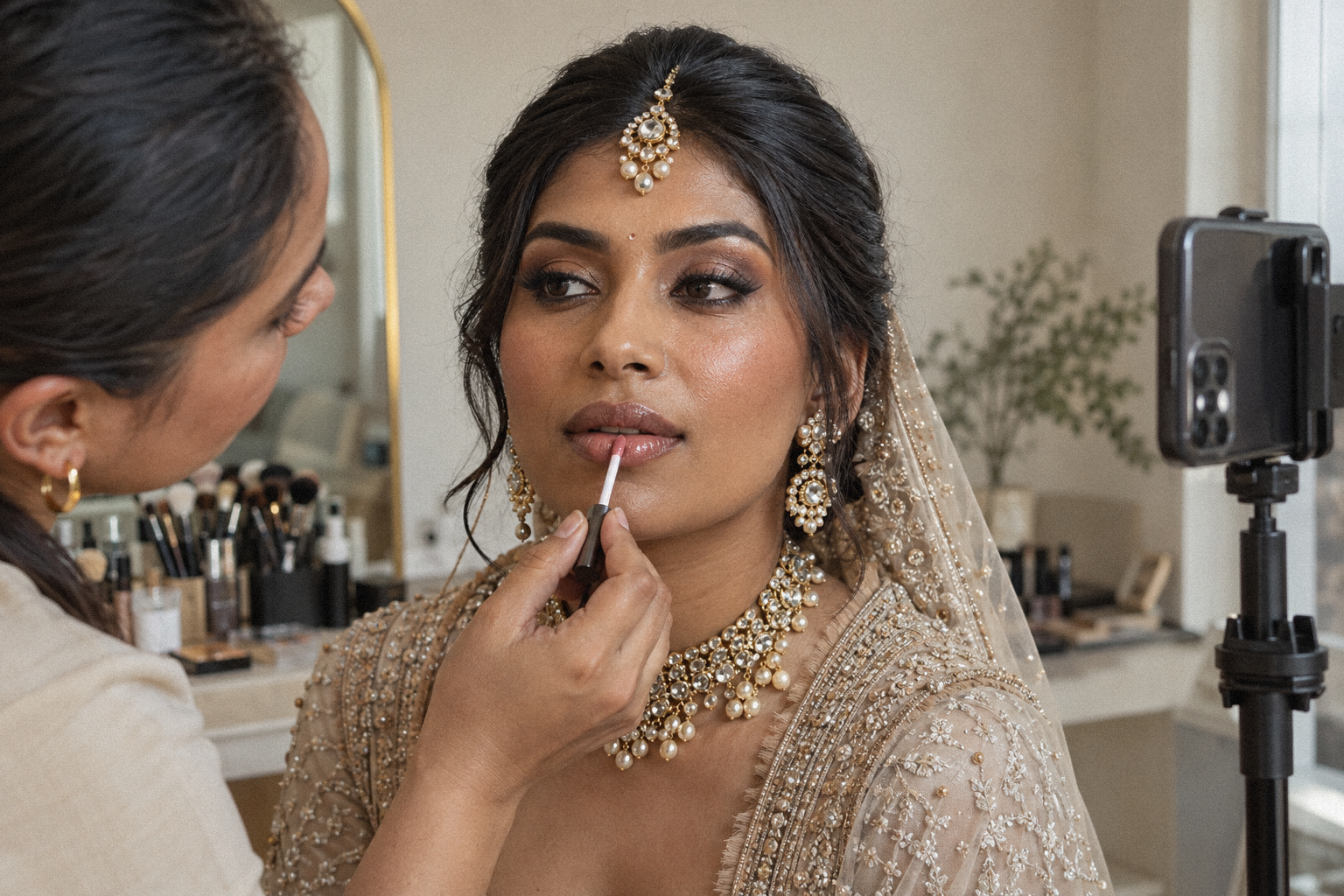
Learning how to grow your freelance makeup artist business starts with connecting your work to a clear, bookable service. Give potential clients a straightforward route from discovering your makeup to checking your location, seeing relevant results, understanding your offer and requesting their date.
In short:
- Choose a lead service and make your location immediately visible.
- Show results on the clients, skin tones and features you want to work with.
- Connect each promotional post to a relevant service page and enquiry prompt.
- Track confirmed bookings and earnings, not just views.
- Build prices and schedules around the whole appointment, including travel and cleaning.
How can a freelance makeup artist grow their business?
A freelance makeup artist can grow their business by choosing a clear target client, showing relevant portfolio work, making their location and services easy to find, and simplifying enquiries and booking. Support that journey with sustainable pricing, reliable client care, local partnerships and regular tracking of which channels generate profitable appointments.
Choose one service to lead your marketing
You can offer several services without promoting them equally. Start with the work you want more of and can confidently deliver; build a separate page for a substantially different audience.
| Lead service | Portfolio to prioritise | Details to make bookable |
|---|---|---|
| Bridal makeup | Close-ups, complete bridal looks, varied ages | Preview, party size, location, ready-by time |
| Event and occasion makeup | Wearable finishes and different intensity levels | Appointment length, lashes, travel options |
| Editorial and commercial makeup | Camera-ready skin and coherent shoot stories | Brief, call time, location, scope and touch-ups |
| Special-effects makeup | Detail photographs and documented processes | Design, preparation, application and removal scope |
How can makeup artists build a portfolio when they are just starting out?
Plan a small set of purposeful shoots rather than collecting unrelated looks. Each session should demonstrate a service, client type or technical capability missing from your makeup portfolio.
Build evidence of judgement, not just dramatic transformations
As a starting exercise, organise four model sessions across different skin tones, ages and eye shapes. Agree image permissions, photographer usage and deliverables beforehand; label collaborative shoots honestly rather than presenting them as paid weddings.
- Photograph consistently. Use the same light, angle and exposure for before-and-after photos, with permission for both.
- Show useful detail. Capture eyes open, eyes closed, complexion texture and a wider portrait. Avoid smoothing filters.
- Explain one decision. Describe placement, texture or finish rather than listing every product.
- Connect to the service. Add the appointment type, location and next step.
Make technical adaptability visible
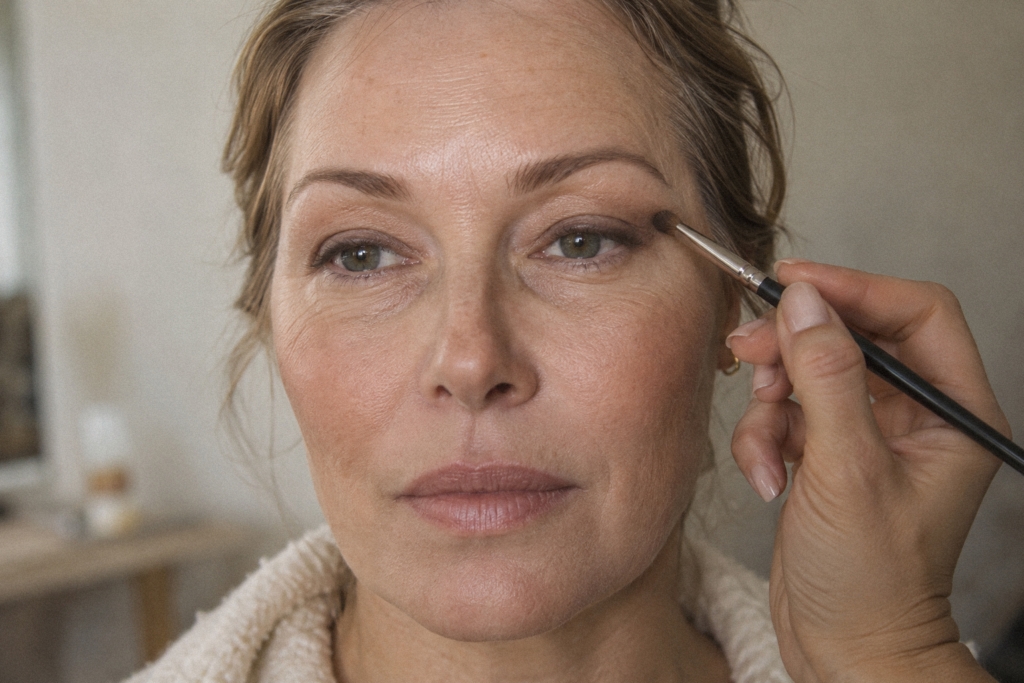
For a hooded-eye example, map the shape with the eyes open and show the finished lid both ways. For mature skin, demonstrate controlled satin texture rather than concealing everything beneath powder. On dark skin, photograph the face alongside the neck and chest so clients can assess your colour matching.
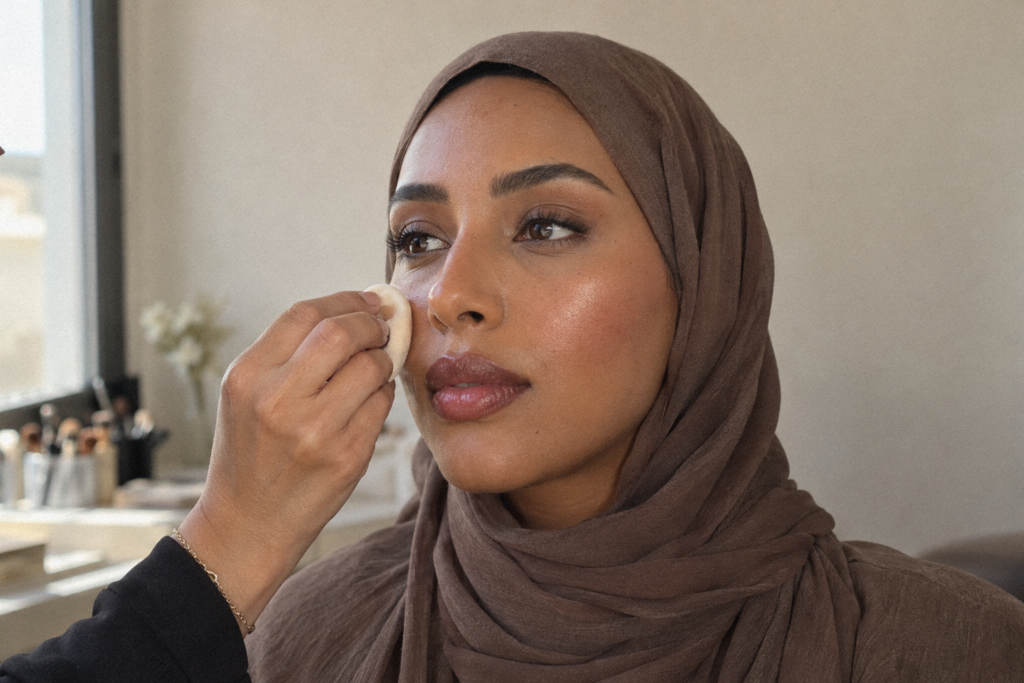
Include fair, medium and deep complexions as you develop your work. Try captions explaining where you pressed powder with a small puff on an oily T-zone, or kept shimmer away from an area whose texture the client preferred not to emphasise. Our guide to lash style, fit and placement for different eye shapes offers a useful topic for a focused portfolio demonstration.
For me, versatility means knowing how to work with different skin types, use different techniques and adapt to different situations. It means understanding the eye shape in front of you so you can adapt a technique you saw on a model to the woman sitting in your chair. That is what adapting makeup is about—not simply reproducing the same look on everyone.
How should a makeup artist market their services locally?
Make your service area obvious, then combine consistent social content with local relationships and a searchable business presence. Treat Instagram and TikTok as routes into your booking journey, not its final destination.
Audit your profile and local visibility
Use a bio such as: “Bridal and event makeup | Austin, Texas | Mobile appointments across [named areas] | Services and availability below.” Replace vague phrases such as “available worldwide” with your actual base and travel arrangements.
Check Google Business Profile eligibility. Google’s guidelines allow a service-area profile for businesses that travel to customers without a storefront; represent your actual business rather than creating profiles for every neighbourhood.
If you operate as a service-area business and do not receive clients at your address, Google’s guidance says to hide that address from customers. Do not present a home or virtual office as a staffed salon.
Give each post one next step
Try a manageable weekly rhythm: one technique demonstration, one finished client look with permission, and one explanation of your service. For example: “Soft definition on hooded eyes for an Austin evening event. View occasion appointments and send your date through the service page.”
Introduce yourself individually to photographers, hairstylists, wedding planners and venues whose work fits yours. Send a relevant portfolio selection and explain how you could support their clients; avoid mass messages asking only for referrals.
What should a makeup artist’s service page include?
Your online portfolio or website should answer three questions quickly: can you create the result, can you serve this location, and what happens next? Send visitors to the relevant service page rather than making them search a general homepage.
Build a page that answers booking questions
- Service and location: appointment type, base and travel coverage.
- Relevant proof: selected images and genuine client feedback.
- Service packages: duration, preparation, lashes, preview and touch-ups where applicable.
- Pricing: a fixed fee, meaningful starting price or clear quotation process; identify extras.
- Booking route: one prominent “Enquire about your date” action and a realistic response window.
Keep the first enquiry short: name, contact details, service, date, location, number of people and ready-by time. Request reference images and detailed preferences later. Test the entire journey on your phone, including the form confirmation and reply email.
How do you turn makeup enquiries into confirmed bookings?
Reply with a clear answer about availability, an understandable quote and one next action. Avoid making clients reconstruct your offer from scattered direct messages.
Use a helpful first-response template
Thank you for enquiring about [service] on 2026 in [location]. I currently have availability for [details]. The total is [amount], including [items]; [travel or other charges] are [included/itemised]. To confirm the schedule, could you send [missing detail]? If you would like to proceed, I will send the agreement and booking-payment instructions. Your appointment is confirmed once [your stated requirements] are complete.
Only state availability after checking your diary. If information is missing, explain what you need before providing a final total.
- Log the enquiry. Record its source, date, service and status.
- Check feasibility. Include travel, setup and the client’s deadline.
- Send the quote. Separate the core service from optional additions.
- Follow up once. Try two or three working days later, unless another timeframe was agreed.
- Confirm in writing. Send the appointment details and preparation guidance after your booking requirements are met.
Use a courteous follow-up: “Would you like to proceed, or is there anything about the service or schedule I can clarify?” Never invent competing enquiries to pressure a decision.
What should a freelance makeup artist include in a booking policy?
Explain what reserves the appointment, what each party is paying or providing, and what happens when plans change. Give clients the policy before they commit, not after payment.
- Named service, date, location, party size and timings.
- Total price, deposit or booking payment, balance deadline and payment methods.
- Cancellation, rescheduling, lateness and missed-appointment terms.
- Travel, parking, early starts and additional-person charges.
- Preview arrangements and changes to the agreed service.
- Your cancellation procedure and arrangements if you cannot attend.
- Separate permission for taking and publishing photographs.
Treat this as a drafting checklist, not a legal template. Have deposits and contracts reviewed for your jurisdiction; do not assume that calling a payment “non-refundable” settles whether you can retain it.
How should a freelance makeup artist set their prices?
Build a cost-based floor, then assess your service, positioning and demand. Do not copy another artist’s fee without knowing whether it covers your own working time and expenses.
Separate appointment costs from ongoing overhead
The US Small Business Administration distinguishes fixed costs from variable costs when assessing break-even. Apply that distinction to ongoing overhead, such as insurance and software, versus appointment-related expenses such as disposables and travel.
For an illustrative appointment, allow three total working hours at $40 per hour, $20 for consumables, $25 for travel and parking, and $15 towards overhead. That produces a $180 planning floor before additional business profit, contingency and applicable tax considerations—not a recommended market rate.
Count consultation, packing, travel, setup, application, cleaning and administration in those hours. Owner compensation is not the same thing as business profit.
The SBA’s break-even calculator uses fixed costs divided by price minus variable cost per service. Use it to test your assumptions, with your own labour accounted for consistently rather than omitted or counted twice.
Protect capacity as demand grows
Record actual timings before accepting back-to-back appointments. Review rates when suitable enquiries regularly exceed your available hours or rising costs erode your return; honour existing agreements. Before adding an assistant, budget their fee, coordination time, travel and clearly defined responsibilities.
Work with a clearly mapped method
When you do not have a clear, well-mapped method or confidence in your technique, you end up taking longer. You are unsure and keep trying things because you do not have a clear plan in your head of what you need to do. For client appointments, you need a workflow you know works and that carries your signature.
A reliable method and adaptability belong together: keep your workflow clear while adapting the technique to the client’s skin, features and situation. The aim is not to repeat one face, but to know how to approach the face in your chair without losing time to uncertainty.
How can makeup artists get more bridal bookings and referrals?
Show both your makeup and your preparation process. Build bridal content around the questions you want clients to discuss: finish, photography, timing, previews and touch-ups.
Make reliability part of your portfolio
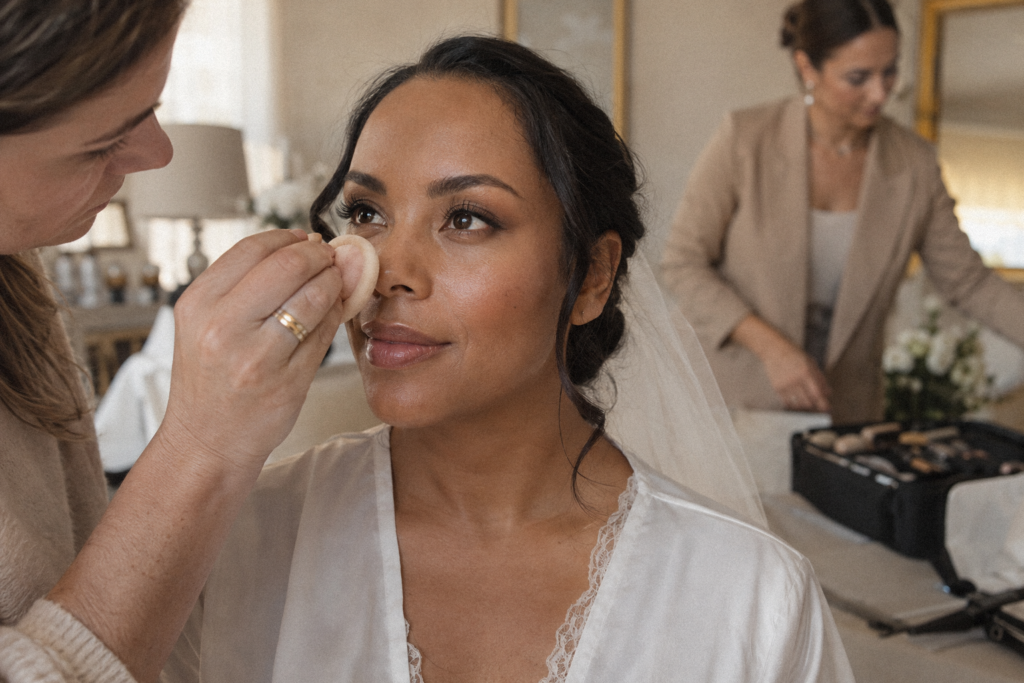
With permission, publish a short case study covering the agreed look, party schedule and finished result. Use our long-lasting wedding makeup planning guide to structure a demonstration of your preparation and application decisions; avoid promising identical wear on every client.
After the appointment, ask for honest feedback rather than a prescribed rating. The FTC advises against requesting reviews only from customers expected to be positive, and against incentives conditional on positive sentiment; consult its guidance on requesting customer reviews.
Thank referring professionals, credit collaborators accurately and keep in touch with past clients who have opted into updates. Keep referral offers separate from review requests.
How do you track which marketing brings makeup bookings?
Use one simple spreadsheet to follow discovery through to confirmed work. Start with enquiries and outcomes; add website analytics when you can maintain them consistently.
Record the source and the outcome
Track enquiry date, first discovery source, contact channel, requested service, quote, status, confirmed service value and reason lost. Ask both “Where did you first find me?” and “What prompted you to enquire?” A photographer referral and an Instagram message can belong to the same journey.
| Observed pattern | What to investigate |
|---|---|
| Views without relevant visits | Audience location, service relevance, call to action |
| Service-page visits without enquiries | Mobile usability, pricing clarity, proof, form length |
| Enquiries without bookings | Availability, response time, quote clarity, client fit |
| Bookings without worthwhile earnings | Total hours, travel, discounts, kit costs |
For a hypothetical cohort of ten qualified enquiries producing three confirmed appointments, enquiry-to-booking conversion is 30%. Define “qualified” consistently, compare similar services and allow time for decisions. Track collected payments separately from booked revenue; neither equals profit.
How to grow your freelance makeup artist business in 30 days
Use the first month to repair the client journey rather than simply posting more. These are working milestones, not promises of a particular booking total.
- Week one: clarify. Choose your lead service, calculate your pricing floor and update location details. Milestone: a clear, costed offer.
- Week two: demonstrate. Fill a specific portfolio gap and publish the service page. Milestone: relevant proof and a tested enquiry form.
- Week three: connect. Publish service-linked content and introduce yourself to three well-matched local collaborators. Milestone: every promotional route has a clear destination.
- Week four: review. Follow up outstanding quotes and inspect your enquiry log. Milestone: identify one obstacle and change one thing.
Beginners should prioritise evidence and a reliable booking process. Established artists should examine earnings per working hour, repeat clients and services that consume disproportionate travel or administration time.
FAQ
Do you need a large social following to start?
Do not make follower count your launch criterion. Start with a relevant portfolio, a defined service area and a working enquiry route, then judge progress through suitable enquiries and paid appointments.
Should a new makeup artist offer free appointments?
Use unpaid portfolio sessions selectively, with a defined creative goal and agreed image permissions. Set a limit beforehand so portfolio building does not become your permanent service model.
How can you get work as a freelance makeup artist without social media?
Build a focused website and approach relevant photographers, salons, production contacts or wedding professionals directly. Ask satisfied clients to share your booking details with anyone seeking your services, without pressuring them.
When should you try paid advertising?
First test your service page, enquiry form and response process. Then consider a capped experiment with a defined audience and budget you can afford to lose; assess suitable enquiries and resulting earnings, not clicks alone.
Start with one complete journey this week: a relevant makeup demonstration, a clear service page, a useful reply and written confirmation. Repair the point where prospective clients hesitate before investing more time in attracting them.