Makeup Trends 2026: Adapt Full Glam for Real Clients
Full glam is part of 2026’s more expressive beauty direction—not a mandate for heavier foundation. Here is how to translate colour, sculpting and statement features into makeup your clients actually want.

By Raphael Oliver
· 10-minute read
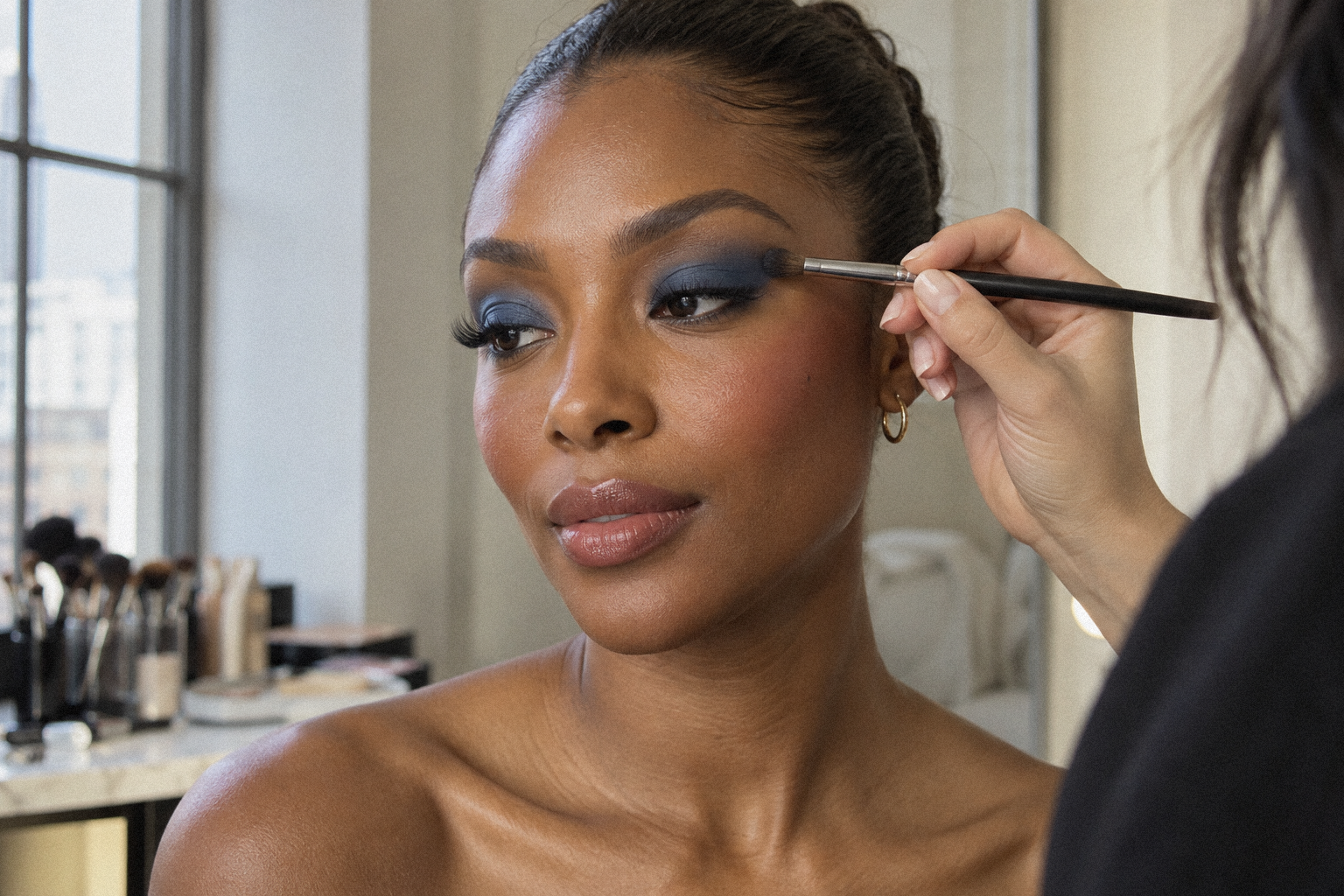
Makeup trends 2026 combine expressive colour with softer finishes, making room for full glam without abandoning natural-looking skin. Early forecasts anticipated renewed interest in 2010s makeup; autumn coverage also highlights barely-there complexions, smoky eyes and sculptural lashes, rather than one compulsory full-face look.
For your client work, treat coverage, sculpting and eye intensity as separate choices—not a package deal.
In short:
- Choose a focal feature before deciding how much foundation to apply.
- Build soft-focus skin through selective coverage and powder placement.
- Translate editorial colour into a placement your client feels comfortable wearing.
- Use the consultation to understand previous makeup experiences, then agree on coverage, sculpting and eye intensity independently.
What Are the Biggest Makeup Trends for 2026?
The biggest makeup trends for 2026 pair soft-focus skin with expressive eyes, visible blush and distinctive lips. Key directions include blue and pastel shadow, graphic eyeliner, smoky grunge, romantic cheeks, statement lashes and blurred lipstick. Nostalgic references span 1980s colour, Y2K shimmer and 2010s glam, reworked with more selective coverage.
Eight looks to translate into client services
- Soft-focus skin: a finish between flat matte and all-over shine. For your interpretation, keep the centre controlled and cheekbones softly luminous.
- Blue and pastel eyes: blue appeared on autumn/winter 2026 runways. Try a lid wash or narrow lash-line accent before committing to brow-high colour.
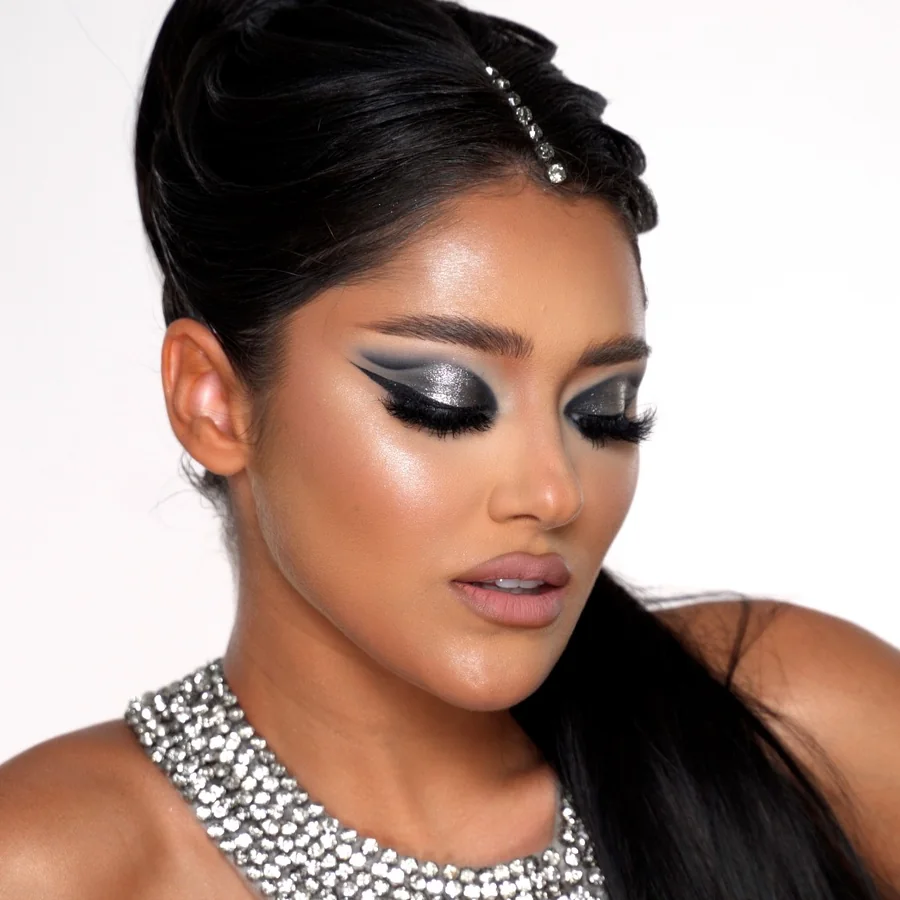
- Graphic eyeliner: statement flicks remain part of the runway vocabulary. Offer a short, precise cat-eye liner as the restrained version.
- Smoky, grunge-inspired eyes: autumn coverage includes soft smoky definition. Start with smudged pencil rather than a fully blackened lid.
- Romantic blush: cherub cheeks feature in runway reporting. Choose rounded placement or adapt the colour into a higher sweep.
- Statement lashes: sculptural lash shapes feature in autumn reporting. Build your client version with separated spikes or individual lashes.
- Bold or blurred lips: crimson runway lips and softly diffused celebrity lips offer different routes. Ask about edge definition as well as colour.
- Reworked nostalgia: borrow Y2K makeup shimmer or 2010s full glam structure without automatically reproducing every layer.
What Makeup Looks Are Replacing Clean-Girl Makeup?
No single look has replaced it. The useful distinction is that more expressive makeup now sits alongside minimalism: Vogue’s summer reporting still documents fresh, softly blurred minimalist looks.
Separate forecasts from observed looks
Allure’s December 6, 2025 article forecast a glam revival; Harper’s Bazaar’s February 20, 2026 report documented runway looks; Allure’s September 3, 2026 autumn edit emphasised individual features. These are different kinds of evidence, not proof that every client now wants a full beat.
When clients ask about makeup trends right now, offer choices. Keep skinimalism as a complexion option; use latte makeup as a neutral starting point, then suggest one expressive addition, such as blue liner or a berry lip.
Learn what the client has liked—and disliked—before
I want to understand what a client likes and what they do not like. During a busy appointment, there is not always time for a long list of questions, so I explore this naturally through conversation as I work. Previous makeup experiences, both positive and negative, are particularly useful: a foundation shade that was wrong, for example, or a lip shape they did not enjoy wearing.
Even a light-hearted story can help you understand the client’s aesthetic, what they expect from their makeup and what beauty means to them. A client may already identify with your work, but that does not replace a personalised conversation.
I believe our aim should be the best possible result with the minimum amount of product needed to achieve it. That does not mean every client wants minimal makeup: some want a more worked, filter-like finish, and that can require more product without necessarily looking heavy.
Kim Kardashian’s makeup is a useful reference for what I mean: I see it as layered makeup whose finished appearance does not necessarily reveal how much product has gone into it. Product quantity and perceived heaviness are not the same thing.
How Do You Create Soft-Focus, Natural-Looking Skin?
Aim for selective coverage and controlled reflection rather than trying to erase every visible feature. The reported soft-focus direction sits between matte and dewy; the following sequence is a practical starting point for client work, with coverage adjusted to the finish you have agreed.
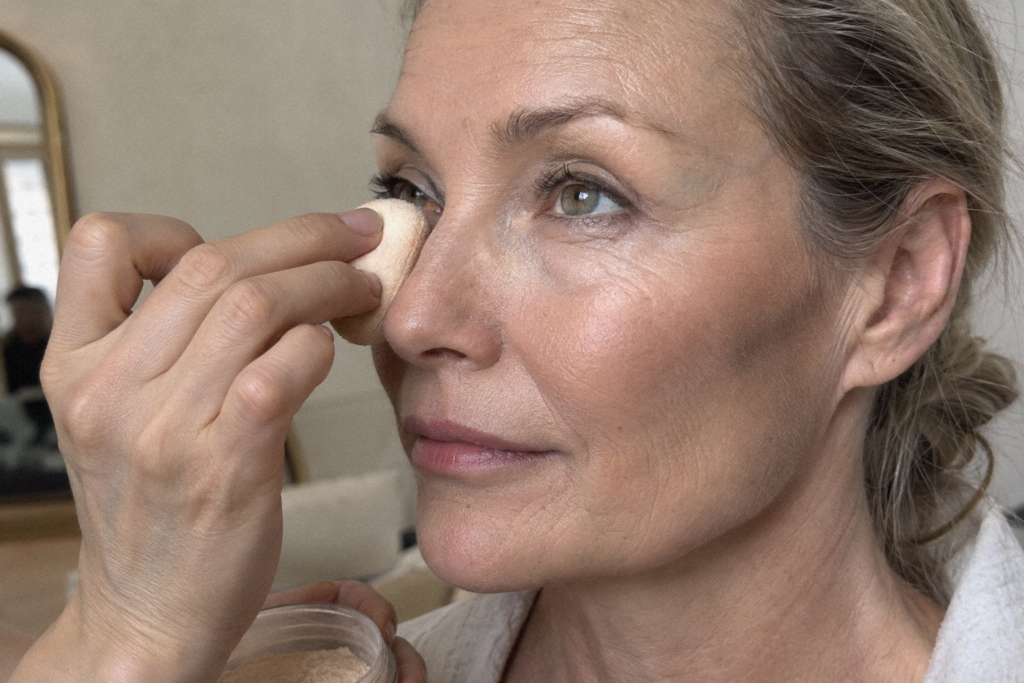
A repeatable complexion sequence
- Prepare by zone. Apply a light moisturiser, adding more only where needed. Before foundation, check that the surface no longer feels slippery.
- Choose coverage deliberately. Start with skin tint for a sheer brief or buildable foundation for greater correction. Stipple a thin layer with a synthetic brush, then assess before adding more.
- Correct locally. Use a small concealer brush around individual marks and shadows rather than applying another full-face layer.
- Sculpt selectively. Begin at the outer cheek hollow and blend upward. Compare both sides from the front before extending contour towards the mouth.
- Set precisely. Press a little finely milled powder around the nose and other shiny areas. Leave satisfactory areas alone.
Choose formulas for the brief
| Option | Suggested use | Application checkpoint |
|---|---|---|
| Skin tint | Sheer, everyday finish | Use local concealer instead of repeatedly layering tint. |
| Buildable foundation | Event coverage | Reassess after each thin layer. |
| Cream blush | Soft, integrated colour | Press over foundation before powder. |
| Powder blush | Controlled colour over a set base | Unload the brush before touching the cheek. |
For dry or visibly textured areas, test a satin finish with minimal powder. On oily zones, begin with thin layers and targeted setting. For mature skin, inspect the under-eye area while the client smiles and remove excess product from folds before setting.
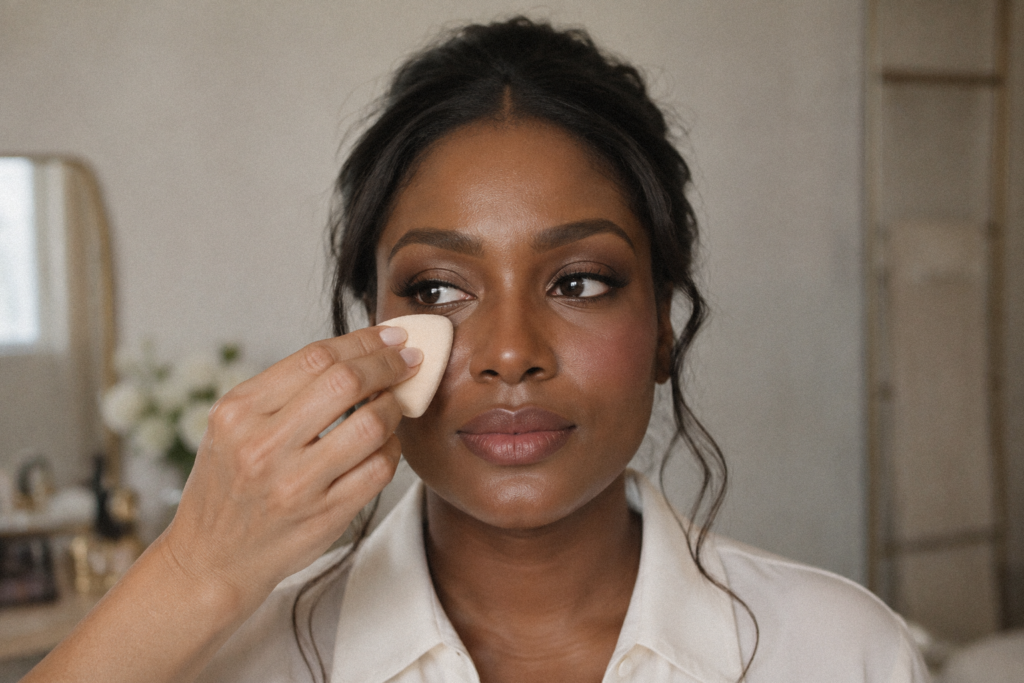
If coverage looks heavy, try pressing with a clean, barely damp sponge before adding anything else. Check the result in daylight and on an unfiltered camera.
Which Eyeshadow Colours Are Trending in 2026?
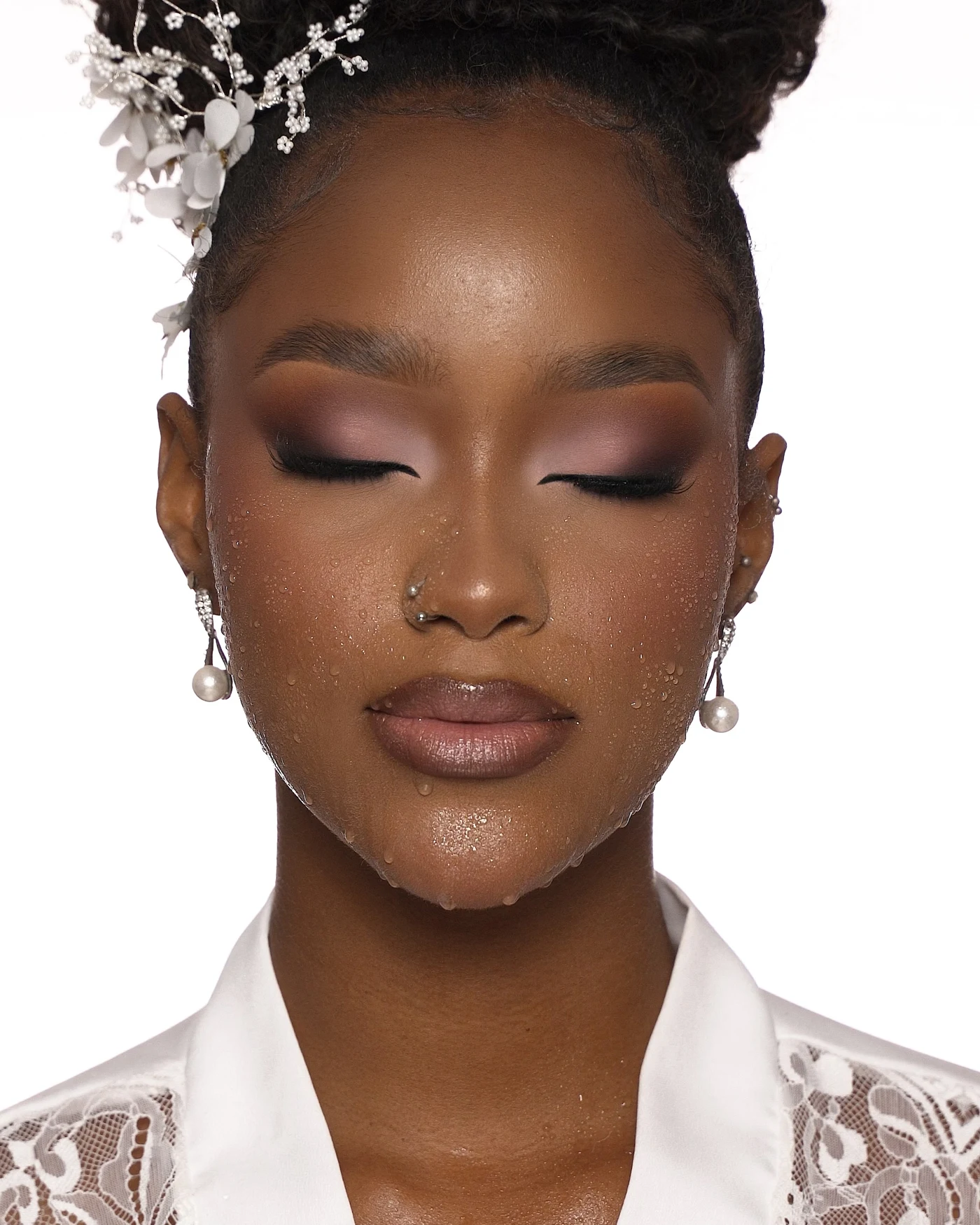
Blue, pastel tones and cool-toned washes feature in 2026 coverage, alongside smoky depth. Blue is more than a forecast: Vogue documented both frosty and sheer versions at autumn/winter shows.
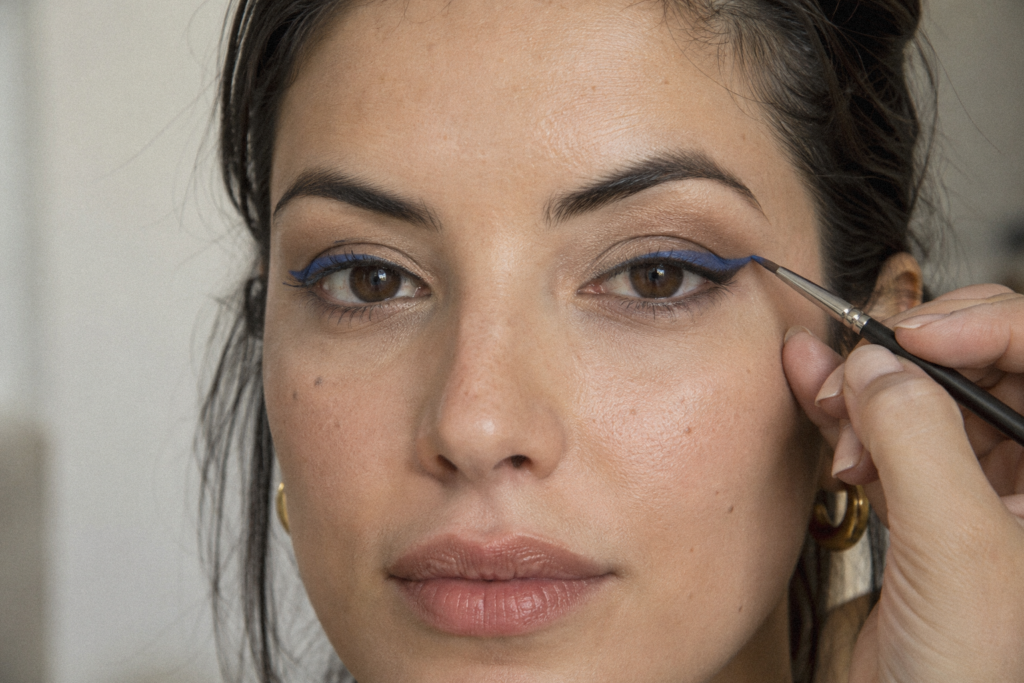
Build a wearable colour statement
- Apply a thin eye primer and follow its setting instructions.
- Press blue, lilac or another chosen colour onto the mobile lid with a flat brush.
- Soften only the boundary with a clean blending brush; avoid spreading colour higher by default.
- Add lash-root definition with pencil. Choose liquid liner when the brief calls for a crisp graphic edge.
For a grunge alternative, sketch brown, charcoal or plum pencil close to the lashes, then smudge with a short, firm brush before it sets. Add matching shadow sparingly. Keep a clean cotton bud ready to reshape the outer edge.
Adjust placement with the eyes open
| Eye shape or feature | Suggested adjustment |
|---|---|
| Hooded lids | Map the visible colour and wing with the eyes open; keep the lash-line band narrow. |
| Monolids | Build a lash-to-lid gradient rather than imposing an artificial crease. |
| Deep-set eyes | Try satin colour on the mobile lid before adding more socket depth. |
| Downturned outer corners | Test a shorter wing and stop lower-lash shading before the outermost corner. |
On dark skin, try a saturated blue or lilac before choosing a white-heavy pastel; use an opaque pastel intentionally when strong contrast is the goal. On fair skin, start with a smaller pigment load. Across undertones, swatch beside the chosen blush and lip rather than treating colour rules as restrictions.
What Blush Placement Is Trending in 2026?
Romantic cherub cheeks and 1980s-inspired draped blush appear in 2026 coverage. Translate the reference into either a rounded flush or a cheek-to-temple sweep, rather than applying both placements indiscriminately.
Choose the shape before the intensity
For cherub cheeks, ask the client to relax their face and press colour onto the rounded front of the cheek. For draped blush, begin on the upper outer cheek and soften towards the temple.
Try sheer rose or peach on fair skin, rose-brown or terracotta on medium skin, and raspberry, brick or plum on dark skin. Treat these as starting swatches, not rules. Combine cream and powder blush only when the extra intensity suits the brief; if you overshoot, stipple the edges with the residual foundation on your brush.
Are Bold Lips and Dramatic Lashes in Style for 2026?
Yes, but neither has to accompany a heavy base. Crimson lips, blurred lip finishes and sculptural lashes all appear in 2026 reporting, offering separate ways to create emphasis.
Pick the lip edge and lash silhouette
For blurred lips, work colour from the centre outwards and diffuse the boundary with a small domed brush. K-beauty lip stains offer another route to graduated colour; for a precise bold lip, keep the outline deliberate instead.
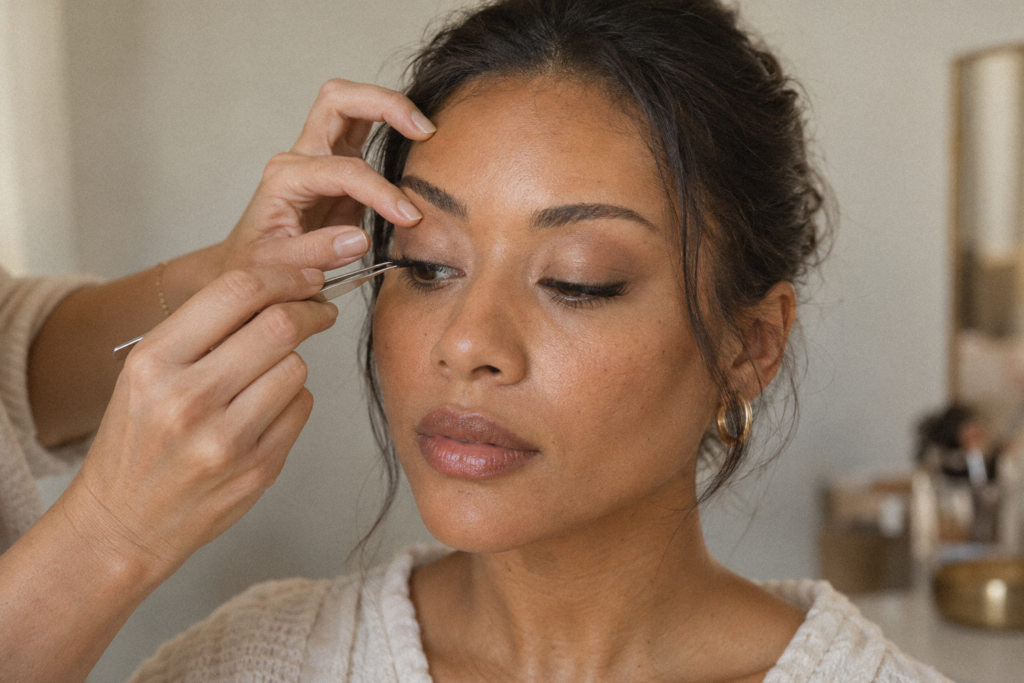
For your lash map, try longer central accents for a doll-like effect or graduated outer accents for elongation. Fit before applying adhesive and follow its instructions. Use our guide to false-lash style, fit and placement for different eye shapes when planning the silhouette.
How Can Makeup Artists Adapt 2026 Trends for Different Clients?
Agree on three separate settings: coverage, sculpting and eye intensity. A client can request high eye intensity with sheer coverage, or fuller coverage with almost no contour.
Translate the reference, not the entire face
- Everyday: propose one colour accent, local coverage and mascara.
- Evening event: offer defined eyes, selective sculpting and a lip finish the client can maintain.
- Photography or video: test the actual lighting where possible; assess reflection and contrast before adding product.
- Bridal: prioritise the agreed appearance, schedule, comfort and touch-up plan—not an automatic reduction in glamour.
For bridal makeup vs full glam, distinguish the occasion from the aesthetic: a bride can choose a full beat. Build in a trial and use the long-lasting wedding makeup plan to organise wear checks and maintenance.
When full glam feels too heavy, identify the cause first
When a client feels that full glam looks too heavy during a trial, my first step is to understand what is bothering them—not automatically reduce the foundation. Is it the complexion finish, the intensity of the blush or contour, the amount of foundation or concealer, or the overall drama of the look?
I also look at how much eyeshadow is visible with the eyes open and whether the lashes feel too strong for the client. These are different concerns, and they call for different adjustments.
A look can be quite natural overall, yet too much blush or a very defined lip outline can make it seem much heavier than it really is. Sometimes, simply changing the lipstick colour completely changes how the person wearing it perceives the makeup.
Identify that specific element with the client before deciding what to soften. The distinction to explain is between the amount of product and the visual impact of a colour, outline or lash shape: reducing everything is not necessarily the answer.
Finish with a practical handover
Reserve the final five minutes for movement, photographs and corrections. Give the client a simple touch-up sequence: blot first, reassess powder, then refresh lips. Avoid promising a fixed wear time without testing the combination on that client.
FAQ
Do you need a new kit for these trends?
Start by auditing what you own. Build a practice look with an existing blue shadow, blendable pencil and satin lipstick before deciding which formula is genuinely missing.
Should you apply statement eyes before foundation?
For a dense smoky eye or loose shimmer, consider doing the eyes first so you can clean the surrounding skin before complexion work. For a simple cream-shadow wash, choose the order that best fits your established workflow.
How should you record a successful trial?
Photograph the finished makeup with permission and note products, placement, lash lengths and the client’s feedback. Record any wear issues after the agreed check-in rather than relying only on the fresh application.
The strongest client adaptation starts with understanding what the client likes, dislikes and expects. Choose the focal feature, use the amount of product needed for the agreed finish and check the result in motion. For structured technique development, explore the Makeup Art course at Raphael Oliver Academy.