

Beauty Lock Makeup: How the LockedBeauty™ Method Works
Created by Raphael Oliver, the LockedBeauty™ method follows three pillars: anchor, build and set. Discover its structure, why thin layers and formula compatibility matter, and how to assess your application before a client’s event.

Di Raphael Oliver
· 12 min read
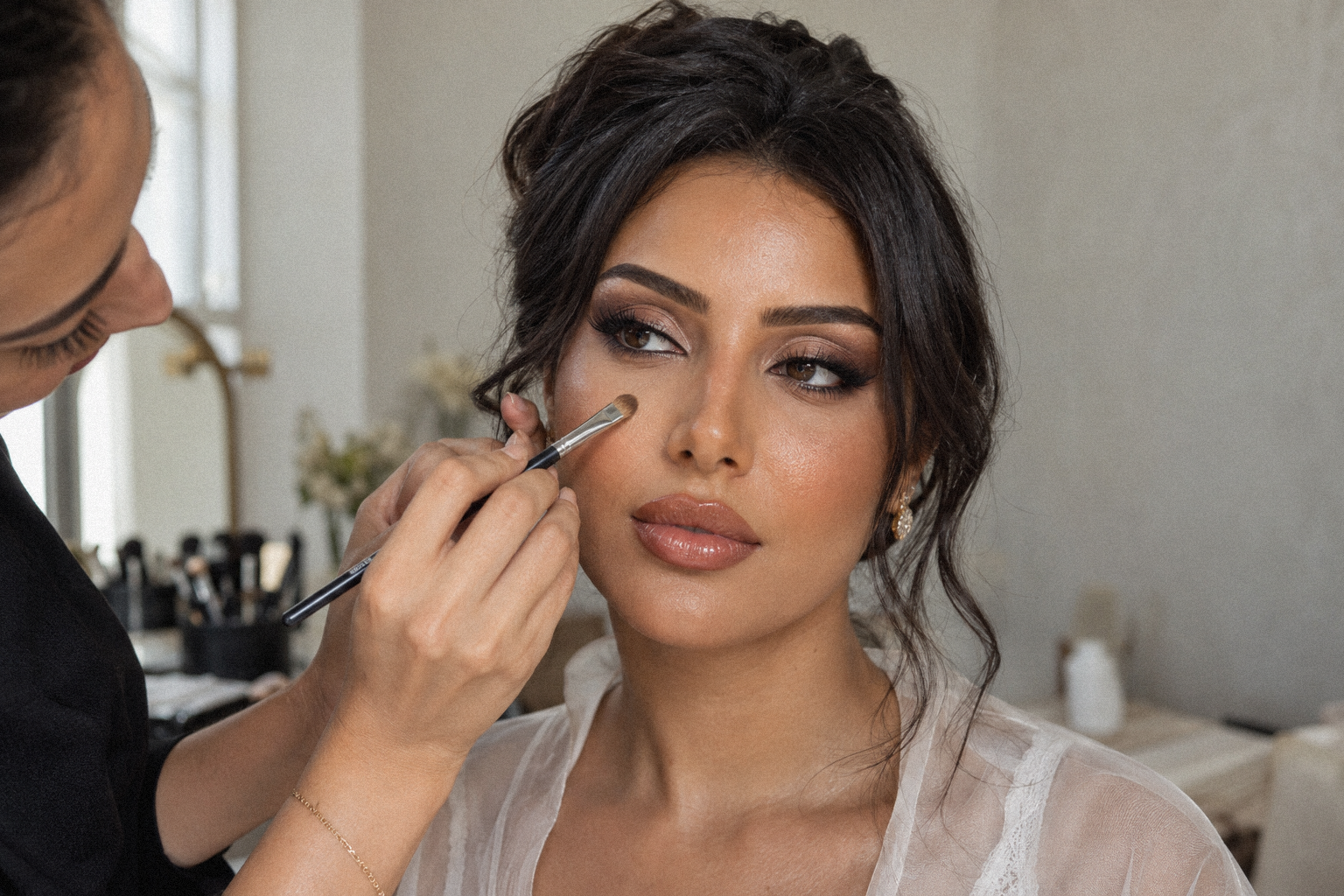
Beauty lock makeup refers to makeup applied with the purpose of resisting water, sweat, tears, and everyday contact—not just makeup finished with extra setting spray. I’m Raphael Oliver, and I created the LockedBeauty™ method around three pillars: anchor, build and set. These represent the anchoring layer, the construction of a durable complexion, and the final setting phase.
For professional and aspiring makeup artists, the key difference lies between simply choosing a long-wear foundation and understanding the architecture of a complete application. LockedBeauty™ is not about making a standard base last a bit longer. My goal is a firmly anchored application with significantly enhanced longevity.
In short:
- LockedBeauty™ is a method developed by Raphael Oliver, structured around anchor, build, and set.
- Each pillar employs specific products tested and approved to endure hours of event wear.
- Formula compatibility is essential: a collection of long-wear products does not automatically constitute a compatible system.
- Apply in very thin layers. An overloaded LockedBeauty™ base cannot simply be buffed away once properly applied.
- This article explains the principles, not the proprietary product sequence taught in the Bridal Online Masterclass.
What is beauty lock makeup?
Beauty lock makeup is an informal term for long-wear makeup designed to resist water, sweat, tears, and contact. This general goal differs from the LockedBeauty™ method created by Raphael Oliver, which follows a defined structure and specific product selections for each stage.
A popular description versus a defined method
When a client requests the beauty lock technique or locked beauty makeup, clarify what the application needs to withstand. An outdoor ceremony, an emotional speech, and hours of dancing each present different challenges.
A long-lasting foundation from Lancôme, Kryolan, or another brand may offer greater durability than a less resistant formula. But foundation alone does not make an application LockedBeauty™. The difference lies in how the products work together across the three pillars.
I approach LockedBeauty™ as a scientific method of makeup application: the architecture matters, not just the individual products. I’m not aiming for just a bit more wear time. I’m aiming for makeup that stays firmly anchored to the skin.
This describes my approach to developing and teaching the method; it is not a laboratory certification or a guarantee that every application will withstand every condition. As an artist, evaluate the finished result and communicate what your trial actually demonstrates.
How does the LockedBeauty™ method work?
The LockedBeauty™ method I developed follows three pillars. Each has a distinct role and requires specific products tested and approved for use within the method.
1. Anchor: establish the anchoring layer
The first pillar establishes the anchoring layer. This is part of the method’s structure, not a generic instruction to apply any primer beneath any foundation. Product selection and compatibility must support what follows.
2. Build: construct the resistant complexion
The second pillar builds the resistant complexion. Here, control of quantity is crucial: the thinner the layers, the better. Build coverage intentionally rather than applying excess product and expecting to remove it later.
3. Set: complete the fixation
The final pillar is setting. It completes the application rather than salvaging an incompatible or overloaded base. A finishing spray alone is not a substitute for the method’s architecture.
The full product selections and application sequence are covered in the Bridal Online Masterclass. The framework below helps you plan and evaluate your work; it does not replicate that sequence.
How do I lock my makeup?
For a professional appointment, start with the client’s skin, the event conditions, and a product combination you understand. With LockedBeauty™, follow the taught anchor, build, and set sequence rather than improvising with products that simply have long-wear claims.
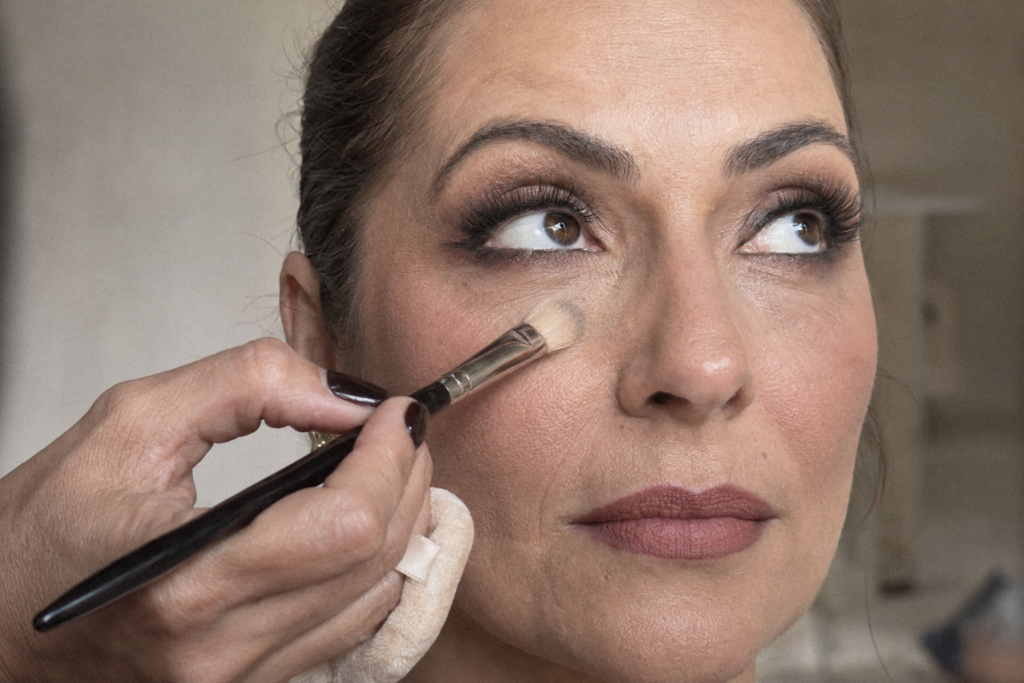
A general long-wear makeup planning framework
Use these checkpoints to organize your trial. They are general professional guidelines, not the LockedBeauty™ product order.
- Map the demands. Note event duration, indoor and outdoor time, expected humidity, glasses, clothing contact, and typical areas of makeup breakdown. Ask where the client usually gets shiny or feels dry.
- Plan preparation deliberately. Consider the client’s skincare and daytime sun protection in your compatibility trial. Avoid adding unnecessary layers or making untested substitutions on the event day.
- Verify the complete combination. Test the actual preparation, complexion, and setting products together. Watch for rolling, crumbling, streaking, or lifting. If something fails, change one variable at a time.
- Control the quantity from the start. Build up in very thin layers and add coverage only where necessary. Avoid applying a heavy full-face layer intending to buff it away later.
- Examine moving areas as you work. Ask the client to smile and look down. Check for buildup around the nose, under the eyes, and in expression lines before finishing the application.
- Follow the correct sequence and instructions. For LockedBeauty™, use the taught method and its specified products. For any product, follow its application instructions rather than improvising around the eyes or saturating the face.
- Inspect and document. Check the finish in natural daylight and photograph it before starting the wear assessment.
With many conventional bases, excess foundation can be reduced with a damp sponge or buffing brush. This does not work the same way with LockedBeauty™. If you’ve applied too much and followed the method correctly, that heavy result is locked in: you need to start over. This is where many beginners make mistakes. Thin layers must be part of your technique from the beginning.
What must locked makeup withstand?
Evaluate water, sweat, tears, heat, and friction separately. A successful water test does not guarantee how the same application will perform under other conditions.
| Challenge | What to inspect | Practical priority |
|---|---|---|
| Water | Streaks, lifted coverage, or color movement after controlled wetting | Assess the entire application, not just one labeled product |
| Sweat | Changes around the hairline, upper lip, and nose during normal activity | Include realistic movement in the trial |
| Tears | Tracks under the eyes and movement of mascara or liner | Plan eye products and gentle blotting separately |
| Heat | Shine, separation, and changes in comfort during wear | Test conditions resembling the event without deliberate overheating |
| Friction or drag | Transfer and missing coverage where glasses, tissues, or clothing contact the skin | Check both contact and appearance |
Set clear expectations
Instead of promising “sweat-proof makeup” or “tear-proof makeup” without qualification, describe what you actually tested. For example, if your trial showed even coverage with slight transfer at the glasses bridge, explain both findings. Give your client an accurate account rather than an absolute guarantee.
How do you create long-lasting, sweat-resistant makeup?
Plan for the individual and climate, but don’t confuse adaptation with abandoning the method’s structure. Record your placement and quantities so you can reproduce a successful trial without introducing untested combinations.
Adjust for skin type and climate
| Situation | Planning priority | Check during the trial |
|---|---|---|
| Oily or combination skin | Assess preparation and setting by facial zone rather than applying more product everywhere | Nose, forehead, chin, and glasses contact points |
| Dry or visibly textured skin | Test comfortable preparation and restrained coverage within the chosen system | Visible texture, flaking, and client comfort |
| Hot, humid conditions | Organize application in a cool, ventilated space when possible and test realistic wear | Hairline, upper lip, and changes after outdoor wear |
| Fine lines or mature skin | Keep layers thin and inspect moving areas throughout application | Accumulation beneath the eyes and around the mouth |
For shine during wear, demonstrate gentle pressing with blotting paper rather than rubbing. Agree on a maintenance plan based on the trial, not an automatic instruction to keep adding powder.
Adjust for fair to deep skin tones
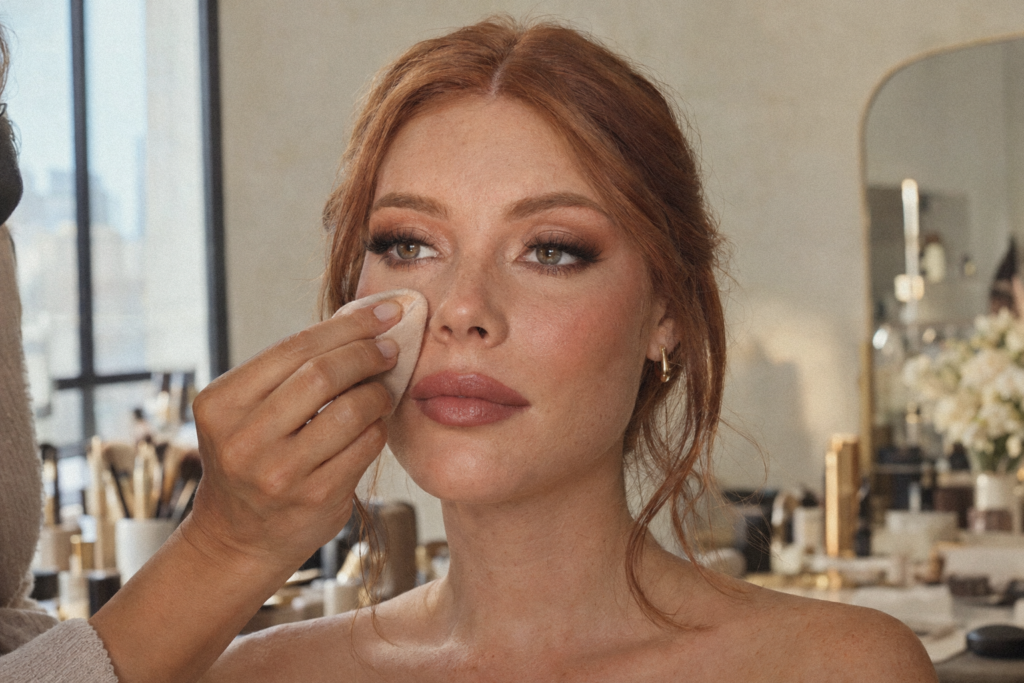
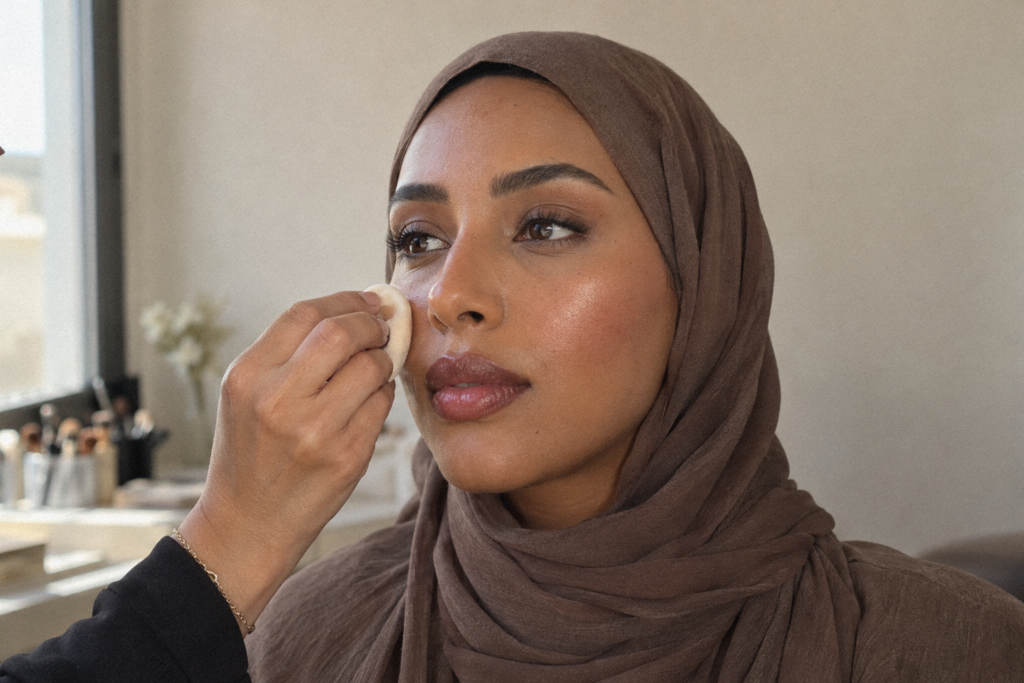
Choose powder by its finished appearance, not just by the word “translucent.” On fair skin, check for unwanted yellow or pink undertones; on medium and olive skin, inspect for a dull cast; on dark skin, pay special attention to pale residue and loss of depth.
Photograph the trial in daylight and with the intended flash setup. Keep color correction localized, and do not automatically lighten the entire under-eye area to create brightness. These appearance checks complement compatibility and durability—not replace them.
.ro-cc{display:flex;align-items:center;gap:16px;margin:36px 0;padding:14px;border:1px solid rgba(20,18,16,.12);border-radius:12px;background:#faf8f5;text-decoration:none!important;color:inherit;transition:border-color .2s}.ro-cc:hover{border-color:#a58653}.ro-cc__img{position:relative;flex:0 0 112px;height:112px;border-radius:8px;overflow:hidden}.ro-cc__img span{position:absolute;inset:0;background-size:cover;background-position:center 25%}.ro-cc__img .ro-cc__b{opacity:0;animation:roCcFade 10s ease-in-out infinite}@keyframes roCcFade{0%,40%{opacity:0}50%,90%{opacity:1}100%{opacity:0}}@media (prefers-reduced-motion:reduce){.ro-cc__img .ro-cc__b{animation:none}}.ro-cc__k,.ro-cc__t,.ro-cc__d{display:block}.ro-cc__body{min-width:0;font-family:Manrope,Arial,sans-serif}.ro-cc__k{margin:0 0 4px;font-size:10px;letter-spacing:.16em;text-transform:uppercase;color:#a58653}.ro-cc__t{margin:0 0 4px;font-size:16px;font-weight:700;line-height:1.3;color:#141210}.ro-cc__d{margin:0 0 6px;font-size:13.5px;line-height:1.45;color:#5c564e}.ro-cc__c{font-size:13px;font-weight:700;color:#a58653}@media (max-width:480px){.ro-cc{gap:12px;padding:12px}.ro-cc__img{flex-basis:84px;height:104px}.ro-cc__t{font-size:15px}.ro-cc__d{display:none}} From the Academy Bridal Makeup Masterclass with Raphael Oliver The LockedBeauty™ bridal method for makeup that withstands tears, heat, and a long celebration. Learn more →How can makeup be made more resistant to tears and water?
Plan the complexion and eye makeup together, then teach your client how to manage moisture without unnecessary friction. Demonstrate catching a tear with the corner of a tissue rather than wiping across the cheek.
Place eye products according to the individual eye
Consider mascara and liner labeled water-resistant or waterproof, following their directions. For hooded eyes, inspect the area where the lid meets the fold with eyes open; for monolids, check liner placement in the client’s natural gaze. Allow products to dry before assessing normal blinking.
Keep the lower lash line restrained if watering is a concern, and avoid crowding the inner corner with product. If lashes are part of the look, review Lash style, fit, and placement for different eye shapes before the trial.
Do not confuse a wear mark with an overloaded base
If a mark appears during a trial, let the area dry and inspect what actually moved before deciding what to do. Do not automatically add a thick stripe of concealer or assume rubbing will restore the finish.
For LockedBeauty™, prevention is especially important. An application made too heavy with excess product cannot simply be thinned with a damp sponge or polishing brush after the method is complete. That is a reason to restart and correct your quantities, not to keep layering over the problem.
How do you test beauty lock makeup before an event?
Use a documented wear trial to assess the application under relevant conditions. These checks are practical observations, not laboratory certification or proof of unlimited waterproof wear.
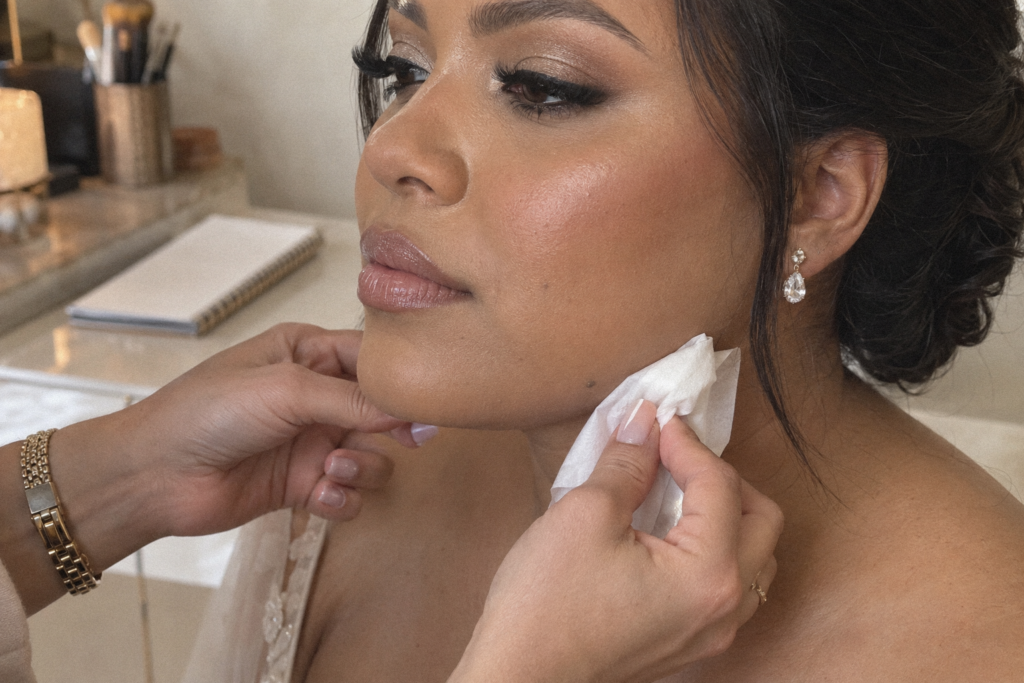
- Record the baseline. Photograph the finished face without filters. Note products, quantities, application sequence, drying intervals, and client comfort.
- Check water separately. With consent, use a lightly water-dampened clean pad on a small outer cheek area, away from the eyes. Inspect after drying; do not pour or spray water onto the face.
- Observe normal activity. Ask the client to wear the makeup through an ordinary day or comfortable walk. Do not use forced sweating, steam, or deliberate overheating.
- Separate contact from drag. Compare a gentle tissue press with one light pass over a small jawline area. Record both tissue transfer and visible loss of coverage; never scrub.
- Recheck over time. Arrange checkpoints that reflect the event’s duration. Record shine, color, creasing, patchiness, comfort, and every touch-up.
The failure I see most: incompatible formulas
In my experience, formula incompatibility is the most common failure in testing. When an artist doesn’t understand the architecture behind the method, the makeup can crumble and develop an unattractive, coarse finish. Knowing how the layers work together is essential.
If that happens, revisit the combination and sequence rather than assuming the issue is a lack of setting spray. Compare your application with the taught method, identify any substitutions, and change one variable at a time before repeating the relevant check. Don’t assume that two individually long-lasting products will perform well together.
Is beauty lock makeup suitable for bridal or party makeup?
The durability goal is essential for bridal makeup, party makeup, summer looks, and emotionally long days. For artists using the LockedBeauty™ method created by Raphael Oliver, the brief also includes appearance and comfort: durability is not an excuse to apply a heavy base.
Bridal, summer, and glass-finish makeup
For brides, plan the entire timeline, including dressing, photos, tears, and touch-ups. Use my long-lasting bridal makeup strategy alongside the trial.
From the AcademyMakeup Art — Artistic Makeup SpecializationTurn color, precision and creativity into your signature style, with 5 artistic looks taught step by step.Discover Makeup Art →If the brief calls for a glass-like finish, evaluate both reflection and wear. Don’t add an untested glossy product over a successful application and assume its resistance will stay the same. For summer parties, test the intended finish under realistic movement and conditions before committing to it.
Three myths to leave behind
- “More product means more hold.” In LockedBeauty™, thinner layers perform better. Excess product can create a heavy finish that requires starting over.
- “One lock spray fixes everything.” The method is built on three pillars—anchor, build, and set—not a single final rescue step.
- “Any long-wear products will work together.” Resistance in individual formulas doesn’t guarantee compatibility within the full application.
FAQ
Is a long-lasting foundation enough to create LockedBeauty™?
No. A long-wear foundation, whether from Lancôme, Kryolan, or another brand, can help extend wear time. However, it does not replace the three-pillar structure or the specific product sequence of the LockedBeauty™ method developed by Raphael Oliver. These brand examples are not an endorsement or an approved product list for the method.
Can I blend away excess foundation after completing the method?
Not like you would with a traditional foundation. If you apply LockedBeauty™ incorrectly with too much product, the heavy finish will set in place. It’s better to start over than to try thinning it with a damp sponge or buffing brush. Control the amount from the very first layer.
How should artists advise clients to remove long-wear makeup?
Recommend a remover suitable for the products used and explain how to use it. Do not advise clients to overcome resistance by rubbing more vigorously.
What should go in a touch-up kit?
Base the kit on the trial: tissues, blotting paper, the lip color, and a small amount of matched powder only if necessary. Explain where each item belongs; do not encourage repeated full-face powdering.
Can I promise a specific number of hours?
Only make claims you can substantiate for the specific application and conditions. Provide your client with the trial results and an honest maintenance plan rather than relying solely on a product’s advertised wear time for the entire face.
Should I introduce new products on the wedding morning?
Keep the successful trial combination whenever possible. Formula compatibility is too important to leave to chance. If a substitution is necessary, explain it and test the combination before applying it to the entire face; an untested replacement should not be assumed to perform within the method.
For artists mastering longevity, the focus isn’t on piling on more products. It’s about understanding the structure, managing the layers, and identifying incompatibilities before the event. Strive for a result you can reliably recreate, not just one that looks flawless right after application.
LockedBeauty™: learn the complete method created by Raphael Oliver. I teach the complete anchor, build, and set technique in the Bridal Online Masterclass, featuring demonstrations on both fair and dark skin tones. Lessons are available in seven languages: original English audio plus dubbing in six additional languages. Discover the bridal training through Raphael Oliver Academy.



La conversazione
Partecipa alla conversazione
Una domanda, un’esperienza o un approccio diverso? Condividilo qui sotto.
Ancora nessun commento: sii la prima persona a condividere la tua opinione.